

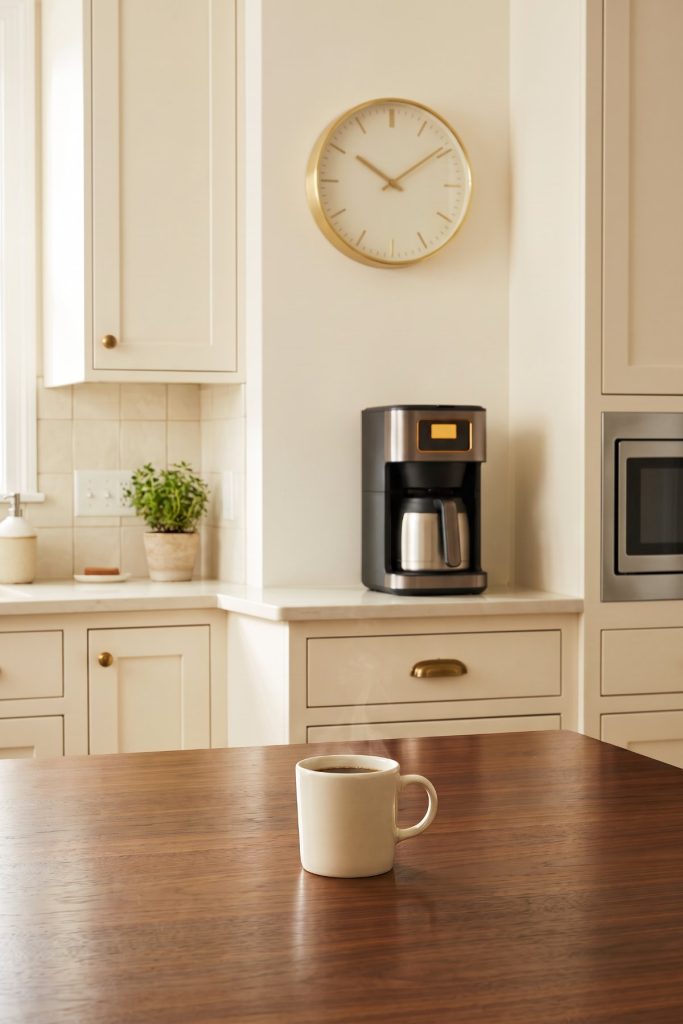
There are four clocks visible from where I am sitting right now. The one on the coffee maker. A decorative clock on the wall, the kind that stays up long after the reason for having it has changed. The one on the computer screen. The one on the microwave, just barely in frame if I turn my head. Four separate instruments measuring the same relentless thing, and not one of them is on my wrist.
I have thought about that contradiction more than once.
I worked with a man years ago who operated on a relationship with time that I could never quite accept and never quite understand. He was late to things, early to others, and entirely unbothered by either. Deadlines bent around him. Schedules absorbed him and released him without leaving a mark. He was not careless exactly, and he was not arrogant about it. He simply moved through his days as though time were a pool and he could ladle out whatever he needed whenever he needed it. I told him that once, directly. He laughed, which did not help.
He drove me absolutely crazy. I understand now that he was also onto something, even if he had it wrong in the specific.
The part he had wrong was the pool. Time is not a pool. A pool holds. A pool waits. A pool is still there when you come back to it. What I know now, sitting at this table with four clocks in my peripheral vision and none on my wrist, is that time is a current. It moves in one direction at one speed regardless of what you have decided to do with it today. It does not pool in the corners waiting for you to get around to it. It does not bank the hours you failed to use and offer them back later at a convenient moment.
The younger version of me understood this intellectually the way you understand things before they have actually cost you anything.
There are things I started later than I should have. I will not make a list because the list is not the point, and because some of them are still in progress and Dixon Crain is not interested in performing an inventory of his own shortcomings for the reader’s benefit. The point is the specific texture of looking back at a window you left partly closed and understanding that the closing was gradual and unannounced and largely your own doing. Not through failure or fear exactly. Through the quiet assumption that the current would wait while you thought it over.
It does not wait. That is the thing nobody tells you clearly enough when you are young and the supply of time feels less like a current and more like weather: ambient, constant, not something you need to account for because it is simply always there.
What I have now that I did not have at thirty is a working understanding of the rate of flow. The current moves at the same speed it always did. I am just positioned differently relative to it, and from here the view upstream looks shorter than it used to. That is not a reason for panic and it is not an invitation to nostalgia. It is information. Useful, clarifying, occasionally uncomfortable information that the younger version of me would have benefited from and probably would not have believed.
The clocks on the wall do not change any of this. Neither does the absence of one on my wrist. Time is not something you monitor. It is something you are inside of, moving with it whether you have decided to pay attention or not.
The man I worked with eventually figured some of this out. I think. We lost touch, the way you lose touch with people when the current carries you in different directions and neither of you reaches across it in time.
In time. The phrase does its own quiet work, if you let it.